10 Best File Cabinet Options for Global Buyers?
Choosing the right File Cabinet is no longer a simple office-supply decision. Global buyers must consider storage capacity, security, delivery conditions, workplace safety, and long-term maintenance. A cabinet that performs well in a dry office may struggle in a humid warehouse or during international shipping.
Industry research supports this broader view. Grand View Research’s global office furniture market analysis identifies continued demand for durable, flexible workplace products. Meanwhile, ISO 15489-1:2016 emphasizes controlled, reliable records management across different organizations and regions. These findings suggest that a File Cabinet should support both physical protection and practical information governance. It is not merely a metal box.
This guide examines ten strong options for international buyers. Each choice is considered through real purchasing details, including drawer design, lock quality, anti-tip protection, fire resistance, corrosion control, dimensions, certifications, warranty coverage, and replacement parts. A 900-millimeter cabinet may fit a standard office wall, but it can create freight problems when palletized. A fire-resistant model may protect paper, yet its weight can increase delivery costs considerably.
Some comparisons remain imperfect. Manufacturer claims are not always tested under identical conditions. Regional safety standards also differ. Buyers should verify test certificates, material specifications, and local compliance before ordering. Price alone can mislead. The cheapest cabinet may have thin steel, weak runners, or limited after-sales support.
The best option depends on use. A law office needs controlled access. A school may prioritize durability and easy labeling. A multinational company may require standardized cabinets across several locations. These ten File Cabinet options provide a practical starting point, not a universal final answer.
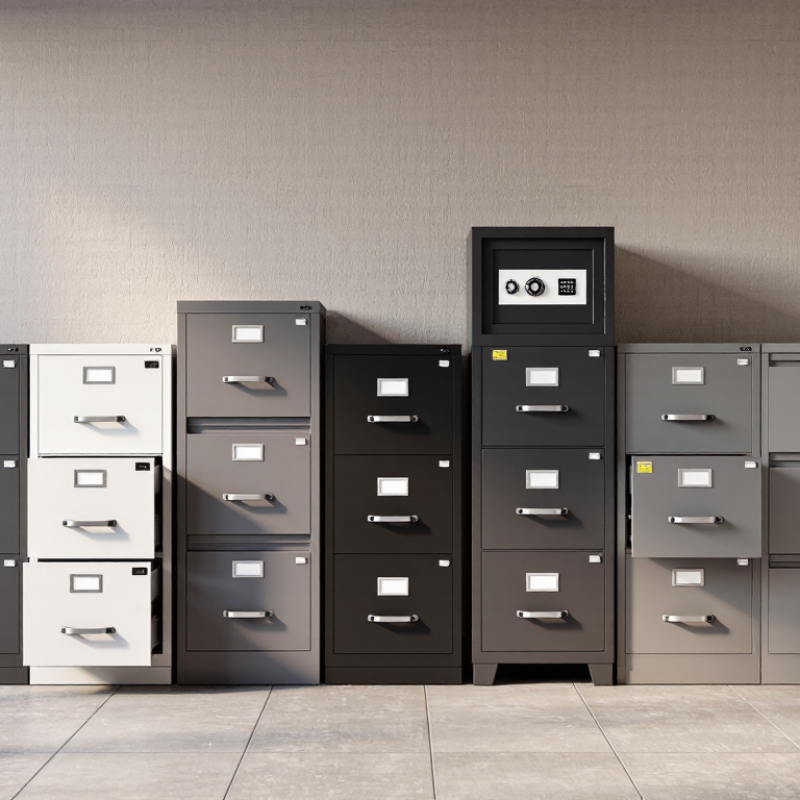
Global Buyer Criteria: ANSI/BIFMA X5.9 and ISO 7170 Storage Standards
For global buyers, the best file cabinet is not simply the cheapest steel unit. A practical shortlist of ten options should begin with ANSI/BIFMA X5.9 and ISO 7170 compliance. ANSI/BIFMA X5.9 evaluates storage-unit strength, durability, and stability under office-use conditions. ISO 7170 also examines loading, drawer operation, tipping resistance, and structural performance. These standards reduce guesswork when cabinets cross climates, transport routes, and workplace cultures.
Look for cabinets with tested anti-tip features, smooth full-extension runners, and clearly rated drawer loads. Check whether testing covered loaded drawers, repeated opening cycles, and uneven flooring.
Grand View Research estimated the global office furniture market at about USD 54.2 billion in 2023, with projected growth near 5% annually through 2030. That expansion increases supplier choice, but it can also hide inconsistent test claims.
Request laboratory reports, test dates, product configurations, and the exact standard edition.
Material thickness matters. So does assembly quality. A cabinet may pass a basic strength test yet feel unstable beside a busy workstation. This is where buyers should inspect tolerances, lock alignment, packaging protection, and replacement-part support.
BIFMA’s North American market reporting tracks shipments, orders, and sales trends, but those figures do not prove individual product quality. They show demand, not durability. A perfect drawer does not exist.
Even certified units need realistic loading limits and regular inspection. One overlooked issue remains humidity: metal finishes, paper weight, and flooring conditions can change performance across regions.
Classify 10 Cabinet Types by Capacity, Materials, Mobility, and Security
Global buyers can classify ten file cabinet options by four practical filters: capacity, materials, mobility, and security. Vertical cabinets suit narrow rooms, usually holding two to five drawers. Lateral cabinets offer wider drawers and faster team access. Mobile pedestal cabinets fit under desks and typically store personal files. Compact personal cabinets support hot-desking with limited capacity. Modular credenzas combine storage with work surfaces. Steel lockers handle shared documents and demanding workplaces. Wooden cabinets provide warmer interiors but need moisture control. Archive shelving cabinets store high volumes, although open access increases exposure. Fire-resistant cabinets protect paper records during short, high-heat events. Electronic-access cabinets add controlled entry, audit trails, and stronger security.
Material choice should follow the working environment. Powder-coated steel resists daily impact, while engineered wood reduces visual harshness. Recycled content matters, yet buyers should request verified environmental declarations rather than trust vague claims. The World Green Building Council reports that buildings create about 39% of global energy-related carbon emissions, making durable, repairable furniture a sensible purchasing factor. Mobility also deserves testing. A loaded mobile cabinet can exceed 50 kilograms, so smooth casters and reliable brakes are essential. The 2024 IMARC office furniture market report identifies hybrid workplaces as a continuing demand driver, supporting smaller mobile storage formats. However, capacity estimates vary by folder thickness and local filing practices. That detail is easy to overlook. Security should match risk: key locks for routine privacy, fire-rated construction for vital paper records, and electronic controls for sensitive access. ISO 15489 guidance reinforces documented records management, but a cabinet alone cannot replace retention rules, access reviews, and staff discipline.
Compare Steel and Wood Models Through UL 72 Fire-Resistance Ratings
Global buyers should compare fire ratings before choosing steel or wood file cabinets. Material alone does not prove protection. UL 72 testing measures how well a cabinet limits heat, fire, and structural failure during controlled exposure. Class 350 protects paper documents by keeping the interior below 350°F. Class 150 and Class 125 ratings support more heat-sensitive media.
The difference matters. NFPA’s U.S. Fire Loss in the United States During 2023 estimated 1,388,500 fires and about $22.3 billion in property damage. A certified cabinet cannot prevent every loss, but it can slow heat reaching contracts, passports, and paper records. UL 72 ratings commonly specify one-, two-, or three-hour endurance. Check the complete certification, including class, duration, lock design, and approved contents.
Steel models often offer stronger impact resistance and easier cleaning. Wood models may suit offices where appearance and furniture integration matter. Yet a wood exterior does not automatically mean poor fire performance. The rating is what counts. It is easy to overvalue weight and thickness. That is a mistake.
Fire tests are controlled. Real buildings are not. Moisture, damaged seals, repeated opening, and poor installation can reduce protection. Buyers should request current test documentation and confirm local acceptance requirements. A cabinet selected only by price may become an expensive compromise.
Evaluate Locks, Anti-Tip Systems, and EN 14450 Security Classifications
Global buyers should judge file cabinets beyond drawer capacity and appearance. According to Grand View Research, the global office furniture market was valued at approximately USD 105 billion in 2023. That scale increases the need for documented security, not vague “heavy-duty” claims. EN 14450:2017 classifies secure storage units into S1 and S2 levels. S2 requires stronger resistance testing than S1, including attacks on doors, locks, and construction points. Ask for the exact certificate, test scope, and production model. A lock alone is not security.
Anti-tip design deserves equal attention. Interlocking drawers should prevent two loaded drawers opening together. The cabinet also needs stable weight distribution and suitable floor anchoring. A tall cabinet can still move when a drawer is pulled quickly. Electronic locks may improve access records, while mechanical locks can remain useful during power failures. However, override keys create a weak point if storage control is poor. EN 14450 classification does not automatically mean fire protection, waterproofing, or resistance to every attack method. That distinction is easy to miss.
Tips: Check whether the certificate matches the delivered cabinet. Test drawer movement with realistic files, not empty units. Confirm anchor requirements before shipping. Record who holds spare keys or access codes. These details feel small. They often decide the real security outcome. One limitation remains: laboratory ratings cannot fully predict careless installation or daily misuse.
Rank Total Cost Using Freight, Duties, Warranty, Certifications, and Service Data
For global buyers, the cheapest file cabinet is rarely the lowest-cost choice. A reliable ranking starts with a landed-cost worksheet. Record unit price, packaging dimensions, shipment weight, freight quotes, import duties, and local handling fees. Use the same destination and delivery terms for every option. Otherwise, comparisons become misleading. A cabinet saving $40 upfront may cost more after freight and duty.
Warranty value needs a practical figure, not a vague promise. Estimate replacement parts, return freight, technician time, and expected downtime. Check warranty duration, exclusions, claim response times, and service coverage in the buyer’s country. Certification records also deserve careful verification. Confirm fire-resistance, material safety, electrical, or ergonomic documents where relevant. A certificate without a matching model number is weak evidence. Ask for dated reports from recognized testing bodies. Keep the documents.
My preferred score assigns landed cost 50 percent, warranty and service 25 percent, certifications 15 percent, and delivery risk 10 percent. This weighting is useful, but not universal. A hospital, school, and home office may need different priorities. Score service using measurable data, including response hours, spare-part availability, and resolution rates. Do not reward impressive promises without records. I would also log damaged cartons from previous orders, even when the sample looked perfect. One limitation remains: freight prices and customs assessments can change quickly. Recheck them before ordering.
10 Best File Cabinet Options for Global Buyers — Total Cost Benchmark
Estimated five-year landed-cost comparison in USD, combining purchase price, international freight, import duties, warranty provision, certifications, and after-sales service. Options are anonymized and ranked by total cost.
The benchmark uses a standardized two-drawer steel cabinet specification, ocean freight, a five-year ownership period, and typical commercial-import cost categories. Actual costs vary by destination, tariff classification, shipment volume, and service terms.