
Menu

What Is the Best Steel Wire Rod Manufacturer in China?

Choosing the best Steel Wire Rod Manufacturer in China requires more than comparing prices or browsing polished websites. It demands evidence from the factory floor, laboratory records, and customer deliveries. Dr. Edwin Basson, Director General of the World Steel Association, has stated, “Steel is an essential material for modern life.” That principle matters here because wire rod supports demanding products, including fasteners, welding wire, springs, tire cord, and construction mesh.

A dependable manufacturer should control carbon content, alloy composition, tensile strength, surface quality, and dimensional accuracy. Buyers should request mill certificates, inspection reports, production standards, and traceability records for each coil. A strong supplier can explain how its electric furnaces, continuous casting lines, rolling mills, and cooling systems protect consistency. Ask for specific figures, not vague promises. For example, can the supplier maintain a stable 5.5-millimeter diameter across long production runs? Can it provide coils with clear heat numbers and protected packaging?

Experience also appears in small details. Coils should arrive dry, tightly formed, and free from damaging rust. Delivery schedules should reflect real production capacity, not optimistic sales language. Certifications help, but they never replace independent verification. A factory may display impressive equipment while offering uneven technical support.

This review will compare leading Chinese manufacturers through quality, capacity, customization, export experience, service, and value. The “best” choice may differ for a spring producer and a construction supplier. That is an important limitation. No ranking should be accepted without checking current test results, factory capability, and application requirements. A careful decision is rarely the fastest one.
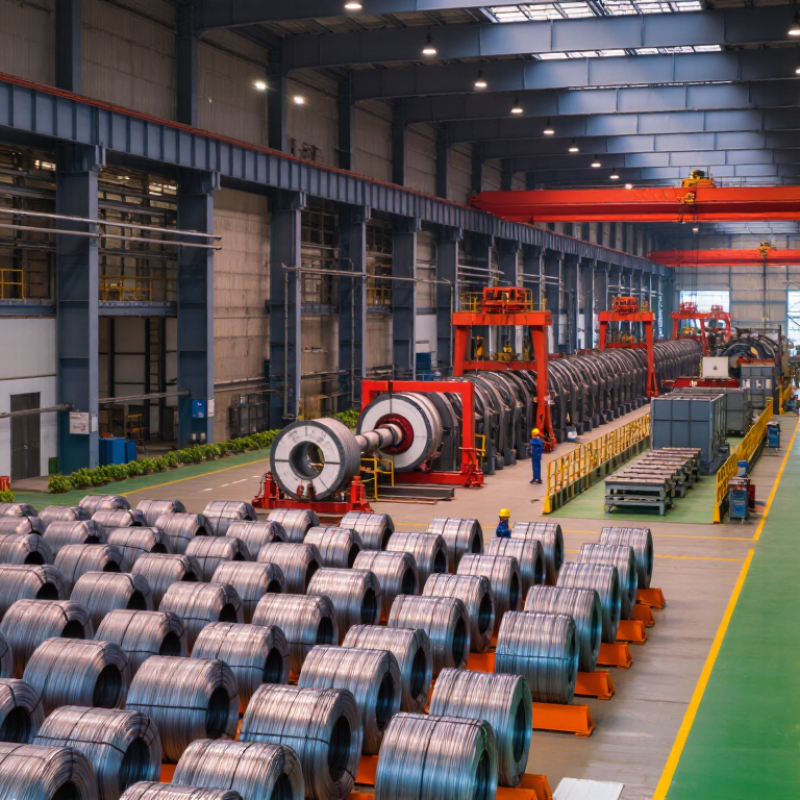
What Is the Best Steel Wire Rod Manufacturer in China?

Defining the Role of Steel Wire Rod Manufacturers in China

China’s Steel Wire Rod Manufacturers do more than melt and roll steel. They control chemistry, surface quality, dimensional accuracy, and delivery consistency. According to the World Steel Association, China produced about 1.019 billion tonnes of crude steel in 2023. That represented roughly 54% of global output. This scale gives manufacturers strong process experience, but volume alone does not prove reliability.

A capable manufacturer converts large-scale production into stable wire rod performance. Its laboratory should verify carbon content, tensile strength, decarburization, and surface defects. These details matter when rod enters fasteners, welding wire, springs, or tire cord production. ISO 16120 provides important requirements for non-alloy steel wire rod. Buyers should also request heat numbers, inspection records, and samples from several production batches. One excellent coil is not enough. I would question any supplier that avoids traceability or offers vague test data. The OECD has warned that global steelmaking overcapacity may approach 630 million tonnes by 2026. This pressure can encourage price competition, sometimes at the expense of maintenance and quality controls.

Tips: Compare mill certificates with independent test results. Check coil markings, packaging strength, and rust protection before shipment. Ask how rejected coils are handled. A factory tour helps, although photographs can be staged. Local inspection still has value. Define acceptable tolerances in the purchase contract, and review performance after the first shipment rather than trusting assumptions.

Key Criteria for Evaluating Chinese Steel Wire Rod Producers

What Is the Best Steel Wire Rod Manufacturer in China?

The best producer should be judged by evidence, not production volume. The World Steel Association reported that China produced about 1,005 million tonnes of crude steel in 2024. That scale supports strong supply capacity, but it does not prove consistent wire rod quality. Buyers should request heat-by-heat test certificates, chemical analysis, tensile results, and coil weight records. Traceability matters when one shipment contains thousands of metres of wire.

Production technology deserves close inspection. A reliable mill should control billet cleanliness, rolling temperature, surface defects, and decarburization. For construction or automotive applications, ask whether testing follows recognized standards such as ISO, ASTM, or EN requirements. Independent inspection can verify diameter tolerance, elongation, yield strength, and surface condition. Certificates alone are not enough.

Delivery performance is equally practical. Review at least twelve months of on-time shipment data, claim records, packaging photographs, and port handling procedures. OECD steel industry reports continue to highlight global excess capacity and uneven market conditions, so low pricing may hide operational pressure. Be careful here. I would also audit energy use, recycled content, and environmental disclosures, although these records can be incomplete. A factory visit remains valuable. Seeing scale removal, coil tagging, and warehouse moisture control often reveals more than a polished presentation.

Leading Steel Wire Rod Manufacturers and Their Product Capabilities

China remains the largest steelmaking base worldwide. The World Steel Association reported approximately 1,005 million tonnes of crude steel production in China during 2024. This scale supports a broad network of wire rod mills, but size alone cannot identify the best manufacturer.

Leading producers usually offer low-carbon, high-carbon, alloy, welding, and spring-grade wire rods. Their capabilities should include controlled chemical composition, stable surface quality, and tight dimensional tolerances. For drawing applications, buyers should request coil test certificates, heat numbers, tensile results, and inclusion-control data. ISO 16120 requirements are useful when evaluating non-alloy steel wire rod for conversion.

Production flexibility matters. A capable mill may supply common 5.5–16 millimetre coils, while advanced lines support specialized grades for fasteners, tire cord, bearings, or welding wire. The International Organization for Standardization emphasizes consistent testing and traceability across steel products. These details become practical when a coil enters a high-speed drawing line. Small surface defects can create repeated wire breaks.

No ranking is perfect. Some suppliers publish impressive equipment lists but provide limited evidence from recent lots. I would compare three shipments, not one sample. Delivery records, inspection response, and batch consistency deserve equal attention. World Steel Association data shows China’s massive output advantage, yet purchasing decisions still depend on grade control, process discipline, and verifiable quality records.

What Is the Best Steel Wire Rod Manufacturer in China? - Leading Steel Wire Rod Manufacturers and Their Product Capabilities

Manufacturer Capability Profile Typical Product Scope Common Diameter Range Representative Steel Grades Production and Processing Capabilities Quality and Compliance Focus Typical End Uses Suitable Buyer Requirements
Carbon Steel Wire Rod Producer Low-carbon, medium-carbon, and high-carbon hot-rolled wire rod for general industrial conversion. Approximately 5.5–16 mm for standard hot-rolled wire rod, subject to mill configuration. SAE 1006, SAE 1008, SAE 1010, SAE 1022, SAE 1045, and equivalent grades under GB/T, ASTM, EN, or JIS specifications. Continuous billet casting, high-speed rolling, controlled cooling, coil compacting, surface inspection, and coil weight customization. Chemical composition control, tensile testing, dimensional checks, surface-quality inspection, heat or cast traceability, and mill test certificates. Cold heading, welding wire, nails, fasteners, mesh, general-purpose wire, and mechanical components. Buyers seeking broad grade availability, stable production capacity, and competitive pricing for high-volume orders.
High-Carbon and Piano-Wire Rod Specialist High-carbon wire rod designed for drawing into high-strength wire and fatigue-resistant products. Commonly 5.5–13 mm, with drawing suitability depending on grade, surface quality, and spheroidizing or patenting requirements. SAE 1070–1090, C72D, C82D, and other high-carbon grades specified by EN, ASTM, or equivalent standards. Controlled rolling, controlled cooling, scale reduction, surface defect monitoring, and production designed for multiple drawing passes. Tight carbon and manganese control, decarburization control, metallographic examination, tensile testing, and surface inspection. Tire cord, steel cord, springs, wire rope, saw wire, high-strength mesh, and prestressed concrete wire. Buyers requiring consistent drawing performance, low surface defects, high tensile strength, and fatigue resistance.
Cold-Heading Quality Rod Supplier Low-carbon and boron-alloyed wire rod for cold forming, thread rolling, and fastener production. Typically 5.5–16 mm, selected according to the finished fastener diameter and forming process. SAE 1008, SAE 1018, SAE 10B21, 20MnB4, 10B33, and comparable cold-heading grades. Controlled rolling, spheroidized-annealing compatibility, descaling, surface conditioning, coil packaging, and lot segregation. Low inclusion levels, controlled spheroidization response, surface quality, dimensional consistency, and mechanical-property verification. Bolts, nuts, screws, automotive fasteners, construction fasteners, and industrial threaded parts. Buyers using multi-station cold headers or high-speed forming lines where surface defects and inconsistent hardness can cause rejects.
Spring and Alloy Wire Rod Producer Alloy and silicon-manganese wire rod for springs, suspension components, and other elastic mechanical parts. Generally 5.5–16 mm, with final selection based on spring design and downstream drawing or forming requirements. 60Si2Mn, 55SiCr, 50CrV, 51CrV4, and comparable spring-steel grades. Alloy-steel melting, continuous casting, controlled rolling, controlled cooling, surface inspection, and coil traceability. Alloy composition control, hardness, tensile strength, decarburization, non-metallic inclusions, and metallographic structure. Automotive suspension springs, mechanical springs, agricultural machinery, railway components, and industrial elastic parts. Buyers requiring stable alloy chemistry, high fatigue performance, and documented heat-by-heat quality data.
Low-Alloy and Structural Wire Rod Supplier Alloy wire rod for mechanical parts that require improved hardenability, strength, or wear resistance. Usually 5.5–16 mm for hot-rolled coil products, subject to equipment and grade requirements. 20MnCr5, 40Cr, 42CrMo, 35CrMo, 40Mn, and equivalent low-alloy grades. Alloy melting, continuous casting, controlled rolling, heat-treatment compatibility, coil marking, and optional surface conditioning. Chemical analysis, tensile testing, hardness verification, inclusion assessment, microstructure inspection, and traceable test reports. Gears, shafts, pins, chains, automotive parts, machinery components, and forged or machined products. Buyers that need predictable response to carburizing, quenching, tempering, forging, or machining operations.
Welding Wire Rod Supplier Low-carbon wire rod used as feedstock for solid welding wire, flux-cored wire, and certain welding consumables. Commonly 5.5–6.5 mm for downstream drawing and surface treatment, depending on the welding-wire process. ER70S-6 feedstock chemistry and other low-carbon compositions specified for welding consumable production. Clean-steel melting, controlled rolling, pickling or mechanical descaling compatibility, precision coil handling, and surface-quality control. Low sulfur and phosphorus, controlled copper and residual elements, surface cleanliness, chemical uniformity, and drawing performance. MIG/MAG welding wire, submerged-arc welding wire, flux-cored wire, and general fabrication consumables. Buyers prioritizing clean surfaces, stable drawing, consistent copper coating, and low weld-spatter performance.
Galvanized Wire and Mesh Feedstock Supplier Low- and medium-carbon wire rod selected for drawing, galvanizing, fencing, mesh, and construction-wire applications. Frequently 5.5–12 mm as drawing feedstock, with the final wire diameter determined by downstream processing. SAE 1006, SAE 1008, SAE 1010, and comparable general-purpose carbon-steel grades. Hot rolling, controlled cooling, surface inspection, drawing compatibility, coil packaging, and supply in regular or compact coils. Surface cleanliness, dimensional tolerance, tensile properties, chemical composition, coil integrity, and batch traceability. Galvanized wire, chain-link fencing, welded mesh, nails, binding wire, gabions, and construction products. Buyers looking for reliable downstream drawing, uniform zinc coating, and consistent performance in outdoor applications.
Export-Oriented Integrated Steel Mill Multiple wire-rod categories supported by integrated steelmaking, rolling, inspection, warehousing, and export logistics. Often approximately 5.5–16 mm, with availability depending on rolling mill design and product specification. Carbon, high-carbon, cold-heading, spring, alloy, and welding-wire grades made to recognized international or national standards. Integrated ironmaking or electric-steelmaking routes, continuous casting, high-speed rolling, automated cooling, coil handling, and container or bulk shipment. ISO-based quality systems, third-party inspection options, mill test certificates, heat traceability, packaging controls, and export documentation. International distributors, wire-drawing plants, fastener manufacturers, spring makers, welding-consumable producers, and construction suppliers. Buyers requiring mixed-grade procurement, recurring shipments, documentation support, and supply-chain coordination.

Note: The ranges and grades shown are representative industry capabilities rather than company-specific claims. Actual availability, tolerances, coil weights, standards, minimum order quantities, and inspection options should be confirmed against the supplier’s current technical specification and mill test certificate.

Quality Standards, Production Processes, and Certification Requirements

Choosing the best steel wire rod manufacturer in China requires more than comparing prices. Quality begins with a controlled billet supply, accurate chemical analysis, and stable rolling temperatures. Experienced producers inspect furnace records, surface conditions, diameter tolerance, and coil weight throughout production.

A reliable process usually includes billet reheating, high-speed rolling, controlled cooling, and careful coiling. Each stage affects strength, ductility, and surface quality. In practical inspections, I would check heat numbers on billets, coils, and test reports. Traceability matters. So does consistency.

Applicable standards may include GB, ASTM, EN, or JIS requirements, depending on the final use. A manufacturer should provide a mill test certificate showing carbon content, tensile strength, elongation, and dimensional results. Independent laboratory testing can confirm these claims. ISO 9001 supports quality management, while environmental and occupational certifications may show broader operational control. However, certification alone is not proof. I would still compare recent inspection records, calibration certificates, and sample results. Some suppliers present impressive documents but weak process evidence. That deserves careful questioning. Ask how nonconforming coils are isolated, corrected, and recorded. Factory audits, witnessed testing, and small trial orders can reveal details that brochures often miss.

How to Select the Best Steel Wire Rod Manufacturer for Your Needs

What Is the Best Steel Wire Rod Manufacturer in China?

Selecting the right steel wire rod manufacturer requires more than comparing prices. China produced about 1,019 million tonnes of crude steel in 2023, according to World Steel Association data. That scale creates choices, but also uneven quality between mills.

Request heat-level test certificates for every shipment. Check carbon, manganese, sulfur, phosphorus, tensile strength, and elongation against your specification. Traceability matters. The certificate should connect the coil to a furnace heat, production date, and inspection record. Ask for dimensional tolerance data, surface inspection procedures, and corrective-action reports. A factory with ISO 9001 certification may have stronger systems, but certification alone proves little without recent records.

Audit production capacity carefully. The OECD Steel Committee has repeatedly identified global excess capacity as a continuing industry concern. Therefore, impressive equipment lists may not guarantee stable delivery. Review monthly output, furnace capacity, rolling speeds, maintenance planning, and export packaging. Confirm whether the manufacturer controls steelmaking, rolling, testing, and warehousing. Outsourcing can increase uncertainty.

Cheap is not simple. A lower quote may hide inconsistent chemistry, weak packaging, or delayed documentation. I would not choose a supplier before checking at least three recent inspection reports and one shipment reference. This process takes time. It can still fail. Weather, port congestion, and raw-material changes may affect delivery or mechanical properties, so your contract should define retesting, claims, and acceptable tolerances clearly.

How to Select the Best Steel Wire Rod Manufacturer in China

A practical evaluation framework for comparing steel wire rod suppliers by the factors that most directly affect purchasing risk and product performance.

Quality consistency and standards compliance receive the highest weights because steel wire rod performance depends on controlled chemical composition, dimensional accuracy, mechanical properties, and traceable inspection records. Capacity, delivery reliability, technical support, and total cost should then be assessed against the buyer’s required grade, diameter, volume, and delivery schedule.