
Menu

How to Choose the Best Screen Printing Binder?

Choosing the best Screen Printing Binder begins with understanding the fabric, pigment, and production conditions. A binder holds color to the textile after curing. It also affects softness, stretch, wash resistance, opacity, and print clarity. The right choice should match the final product, not merely the supplier’s description.

In practical printing work, a cotton T-shirt may need a different binder from polyester sportswear. Cotton can absorb moisture and support a softer hand feel. Polyester may require low-bleed chemistry and careful curing control. Small test prints can reveal problems early. Check the surface after curing. Rub it, stretch it, and wash it before approving a full production run. A print that looks excellent under bright workshop lights may crack after repeated washing.

Technical data matters, but it does not replace experience. Review curing temperature, curing time, viscosity, compatibility, storage life, and recommended pigment levels. Ask suppliers for safety data, application guidance, and batch consistency information. Reliable manufacturers should explain limitations clearly. Be cautious when a product claims to work perfectly on every fabric. That promise sounds convenient, but it may hide important trade-offs.

There is no universal winner.

A thoughtful selection also considers equipment and operator skill. Manual presses, automatic lines, heat tunnels, and heat presses can produce different results. Keep records of ratios, mesh counts, squeegee pressure, and curing conditions. These details make troubleshooting easier. Even experienced printers can overlook fabric pretreatment or uneven heat. That is why controlled testing remains essential when choosing a Screen Printing Binder.
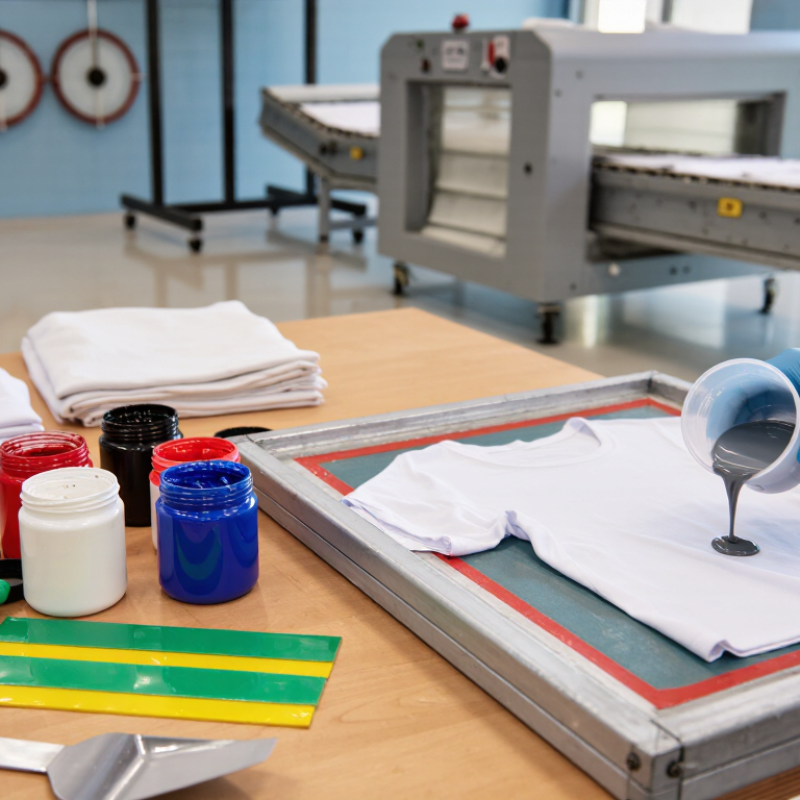
How to Choose the Best Screen Printing Binder?

What Is a Screen Printing Binder and Why Does It Matter?

A screen printing binder is the film-forming part of an ink system. It holds pigment particles together and helps them bond with fabric after curing. Without a suitable binder, a bright print may crack, fade, or wash away quickly. It is the glue.

The binder also affects softness, stretch, opacity, and drying behavior. A flexible binder suits sportswear, while a stronger film may work better on heavy cotton. Water-based systems often create a softer hand feel, but they can dry in the screen if production conditions are unsuitable. Small tests matter. I usually print a fabric swatch, cure it according to the technical sheet, and check stretch, rubbing, and washing performance.

Choosing the best binder requires more than selecting the strongest formula. The fabric fiber, ink pigment, curing temperature, and intended use must work together. A binder designed for cotton may not adhere well to synthetic fibers. In my experience, curing is the detail people underestimate most. A print can look perfect and still fail after laundering because the film never reached its proper cure. I have also seen overly hard binders reduce comfort, even when durability improved. That trade-off deserves honest testing. Review technical data, confirm compatibility, and test several ratios before full production. The “best” binder is the one that performs reliably on the actual garment, not merely in a laboratory sample.

Which Binder Types Suit Different Printing Materials?

How to Choose the Best Screen Printing Binder?

The right binder depends on the printing material, stretch, surface energy, and curing temperature. For cotton and other absorbent fabrics, water-based acrylic binders create a soft handle and good wash resistance. They suit breathable garments, but poor curing can cause cracking after repeated washing.

Polyurethane binders work better on polyester, nylon, and stretch fabrics. Their elastic film follows fabric movement. Silicone binders offer excellent stretch and a smooth, rubber-like finish for performance garments. They cost more and demand tighter process control. For paper, coated boards, plastics, and metal, harder acrylic or polyurethane systems usually provide stronger adhesion. Always test the exact substrate. “Universal” binders rarely behave universally.

Grand View Research valued the global textile printing market at approximately USD 2.6 billion in 2023 and expects continued growth through 2030. Smithers’ textile-printing outlook also highlights sustainability, lower water use, and durable finishes as major industry priorities. These trends make PVC-free, low-temperature, and water-based systems increasingly practical, though performance still matters more than a fashionable specification.

Tips: Print a small test panel first. Check wash durability, stretch recovery, opacity, and surface feel after curing. Measure the dryer temperature, not just its display setting. I have found that a softer binder can look better initially, yet fail sooner on rough fabrics. That detail deserves honest review.

How to Match Binder Performance With Fabric and Ink Requirements?

How to Choose the Best Screen Printing Binder?

Matching binder performance to fabric and ink requirements starts with the fabric, not the product label. Cotton absorbs water quickly, so the binder must form a flexible film without creating a stiff, plastic hand. Polyester needs stronger adhesion and resistance to dye migration. Stretch fabrics require elongation after curing, especially around collars, cuffs, and seams. The 2024 Textile Exchange Materials Market Report recorded approximately 124 million tonnes of global fiber production in 2023. Polyester represented about 57 percent, making synthetic-fabric compatibility increasingly important.

Start with the fabric.

Ink chemistry changes the decision. Water-based pigment inks usually need a binder that balances penetration, color strength, softness, and wash durability. A high-solids binder can improve opacity, but it may reduce breathability. A softer binder can improve hand feel, yet it may weaken crocking resistance. Screen tension, mesh count, deposit thickness, and curing temperature also affect the result.

Do not judge the binder alone. Measure, then adjust.

Practical testing should include wash durability, dry and wet crocking, stretch recovery, and adhesion. AATCC TM61 provides an accelerated laundering method, while controlled curing records help identify process variation. On polyester, test migration after heat exposure, not only immediately after printing. I have seen soft prints fail because the film was under-cured.

That mistake is easy to repeat.

It is also worth questioning whether maximum softness is truly the best target. A slightly firmer film may deliver better durability, but excessive hardness can damage comfort and perceived quality. Use fabric swatches, production ink, and the actual curing profile before approving a binder.

What Key Factors Affect Binder Selection and Application?

How to Choose the Best Screen Printing Binder?

What Key Factors Affect Binder Selection and Application?

Choosing a screen printing binder starts with the material, not the color chart. Cotton, polyester, blends, and coated surfaces absorb and release moisture differently. I test a small print on the actual fabric because specifications rarely predict every production result. A binder that feels soft on cotton may migrate or cure poorly on synthetic fibers. Fabric stretch matters too. A rigid film can crack around seams after repeated movement. Keep the test swatch.

Viscosity affects mesh release, edge sharpness, and print thickness. Higher viscosity may hold detail, but it can clog fine mesh under dry conditions. The binder should match the pigment load, mesh count, squeegee pressure, and desired hand feel. Cure temperature and dwell time are equally important. An undercured print may pass a quick inspection and fail after washing. I use controlled samples, then check adhesion, stretch, crocking, and laundering. Small differences matter.

Workroom conditions can change the result. Humidity, airflow, flash drying, and fabric tension influence application consistency. Safety data and local chemical requirements deserve careful review before use. Do not select by price alone; rework and rejected garments cost more. In my trials, I sometimes choose a slightly less vivid color system because it gives steadier coverage and fewer defects. That choice is not always right. One overlooked variable, such as an inaccurate dryer reading, can distort the whole evaluation. Record every setting, including batch age and mixing time, so another operator can reproduce the test.

How to Test, Compare, and Optimize Your Chosen Binder?

How to Choose the Best Screen Printing Binder?

How to Test, Compare, and Optimize Your Chosen Binder?

Choosing a binder becomes practical only after controlled testing. In production trials, I compare small fabric swatches, not full garments. Keep pigment load, mesh, squeegee pressure, print strokes, and curing conditions consistent. Record wet appearance, hand feel, opacity, viscosity, and drying behavior. A digital scale and thermometer reduce guesswork. Still, measurements can mislead when fabric lots vary. Mark every swatch clearly.

Tips: Test three binder levels around the recommended range. Cure one set below, one at, and one slightly above the target temperature. Check adhesion through washing, stretching, rubbing, and close visual inspection. Wait 24 hours before judging softness. Shortcuts often create false confidence. Include untreated fabric as a control.

Compare results after conditioning, not immediately after curing. The best binder balances adhesion, flexibility, color clarity, and production speed. A very soft film may lose durability. A harder film may crack during stretching. Inspect print edges under angled light. Pinholes and uneven coverage become obvious there. If results conflict, change one variable at a time. My early trials changed two variables together, making conclusions weak. Repeat the strongest setting across different fabric colors and batches before approval. Keep detailed records, even when the results look disappointing.

How to Choose the Best Screen Printing Binder?

Compare binder chemistries by testing wash durability, dry crock resistance, stretch recovery, and print softness under the same fabric, mesh, ink deposit, curing temperature, and wash conditions.

Scores are normalized to a 0–100 screening scale, with higher values indicating better performance. Use the results as a comparison framework, then validate the selected binder on the final fabric and production equipment.