
Menu

How to Find the Best Dinosaur Puppet Supplier?

Finding the right Dinosaur Puppet supplier takes more than comparing catalog photos and unit prices. A soft-looking puppet may feel stiff in a child’s hands, while bright colors can fade after repeated cleaning. Inspect stitching around the mouth, eyes, and finger opening, where frequent movement puts stress on the fabric. Ask what materials are used, how puppets are finished, and whether samples match bulk orders. Small details matter. A loose seam or awkward fit can turn a fun classroom prop into a frustrating one. Product claims deserve a closer look, too; request clear specifications rather than relying on broad phrases such as “premium quality.”

A reliable supplier should explain production timelines, minimum order quantities, packaging, customization options, and how defects are handled. Request a physical sample when possible, then test its movement, weight, seams, and comfort during a short demonstration. Ask for close-up photos and written material details if a sample is not available. Check whether the supplier has experience serving schools, theaters, museums, or toy retailers, and look for consistent communication across quotes and product documents. This guide explores practical ways to compare suppliers without treating a low price or polished website as proof of quality. No supplier is perfect. Even careful checks can miss a flaw, so record questions and confirm key details before ordering. That extra step may feel slow, but it can prevent avoidable surprises.
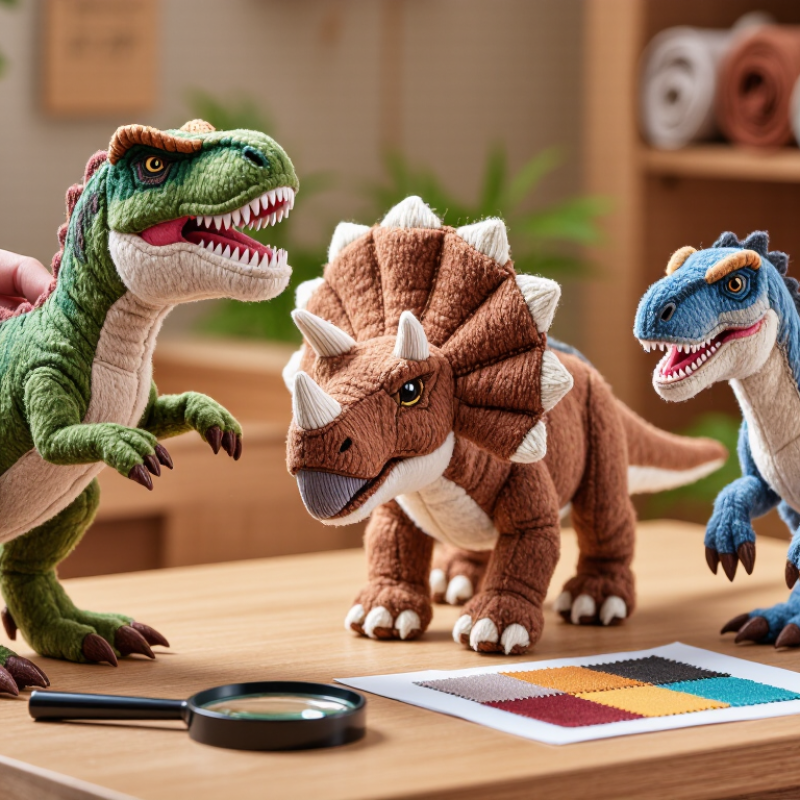
How to Find the Best Dinosaur Puppet Supplier?

Define Your Dinosaur Puppet Requirements

Before contacting a supplier, write a one-page brief describing who will use the dinosaur puppet and where. A classroom puppet needs a different build from a stage prop used under bright lights. Specify the dinosaur species, overall length, hand opening, weight, mouth movement, and whether one or two hands operate it. Include a simple reference sketch. A ruler beside the sketch helps prevent scale misunderstandings.

Set material and performance expectations in plain terms. For children’s use, request fabric and component details, care instructions, and relevant test documentation; ASTM F963-23 is one recognized toy-safety standard, but applicable requirements depend on the sales market. Ask for close-up photos of seams, teeth, eyes, and the jaw hinge. These details often reveal more than a polished catalog image. State your target price, order quantity, delivery window, packaging needs, and acceptable sample revisions. Be precise. I have seen specifications leave out hand size, then require awkward redesigns.

Budget needs context, too. Circana’s 2023 global toy-market review reported toy sales falling 7% while average selling prices rose 1%. That broad market data is not puppet-specific, but it supports comparing value, not price alone. Request a physical sample and test its grip, movement, and stitching for several minutes. Note what feels wrong. That note may be imperfect, but it gives suppliers something concrete to improve.

Identify Potential Supplier Types and Sources

A good search starts by matching the supplier type to your puppet’s purpose. Specialist puppet makers and theatrical prop workshops may offer custom dinosaur shapes, hand controls, and durable stitching. General manufacturers can suit repeat orders, while wholesalers often carry ready-made designs. Ask how the jaw opens and whether the puppet fits an adult hand comfortably. Small details matter.

Look beyond search results. Trade directories, puppetry groups, theatre suppliers, and referrals from event professionals can reveal useful leads. At a trade fair, handle the puppet and check its weight, fabric, seams, and movement. When buying remotely, request a current video showing the puppet in use, plus clear material and sizing details. A polished listing is not proof of careful construction. I have seen attractive photos leave practical questions unanswered.

Tips: Compare at least three suppliers. Ask for a sample or close-up photos of the mouth mechanism and seams. Confirm production time, repair options, and what happens if the puppet differs from the agreed specifications. Note vague answers; they may signal a poor fit, though not always.

Evaluate Product Quality and Manufacturing Capabilities

A reliable dinosaur puppet supplier should show how quality is controlled, not just display a polished sample. Ask for material specifications, stitching standards, and inspection records. Check the puppet in motion: does its jaw open smoothly, and do the seams hold when the head turns? Look closely. Loose threads and uneven teeth can signal inconsistent assembly.

Manufacturing capacity matters, too. Request a sample made with the same materials and construction planned for the order. Then compare it with units from a small production run. One awkward truth: a perfect prototype may hide a rushed production line. Ask how the factory handles defects, rework, and changes to fabric or mechanisms. Clear answers are more useful than broad claims.

The ISO Survey 2022 reported 1,265,216 valid ISO 9001 certificates across 189 countries and economies. This shows how widely quality-management systems are used; certification alone does not prove a puppet’s safety or consistency. Ask what the supplier’s system covers, and request recent inspection results. For soft, movable puppets, examine seam strength, secure components, fabric color consistency, and repeated jaw movement. A brief video of batch testing can help, but it cannot replace independent checks. A little doubt is healthy.

Compare Pricing, Lead Times, and Service Terms

How to Find the Best Dinosaur Puppet Supplier?
Compare Pricing, Lead Times, and Service Terms

A low quote can hide costs for sample making, custom colors, packaging, or shipping. Ask each supplier for an itemized estimate based on the same puppet size, materials, and order quantity. Compare the final delivered cost, not just the price per piece. Small details matter.

Lead times need the same careful check. Request separate dates for sample approval, production, and dispatch, then ask what could cause delays. A supplier may promise quick production but need extra time for fabric sourcing or quality checks. Get the schedule in writing, and leave a buffer for revisions. Even a clear timeline can slip.

Service terms reveal how a supplier handles problems. Check whether the quote includes a pre-production sample, inspection photos, and a process for reporting defects. Clarify who pays for changes when a sample differs from the agreed design. Also confirm payment milestones and how quickly messages are answered. A fast reply is useful, but it does not guarantee dependable support. It is easy to focus on price and overlook the less visible terms; I would compare them in one simple table before choosing.

How to Find the Best Dinosaur Puppet Supplier?

Compare unit pricing, lead times, and service terms before choosing a supplier.

Illustrative example only—not verified supplier quotes. Request written quotes for the same puppet specifications, order quantity, shipping terms, and delivery destination. Also confirm sample approval, revision limits, warranty, and defect-resolution terms.

Verify Supplier Credentials and Make Your Selection

Before comparing prices, verify that a dinosaur puppet supplier is a real, reachable business. Request its registration details, workshop address, and a named contact. Check that certificates and inspection reports are current and issued by identifiable organizations. A polished PDF is not proof by itself. Ask whether each document covers the exact puppet model and materials you plan to order.

Review the production process, not just the paperwork. Request recent photos or a video showing the puppet’s stitching, mouth mechanism, and finishing work. For fabric or foam puppets, ask how materials are selected and how seams are checked. If the supplier provides test reports, confirm that the listed materials match your sample. Generic documents may leave important questions unanswered.

A sample makes the choice more concrete. Move the jaw, inspect the seams near the snout, and check whether the puppet feels comfortable after several minutes of use. Ask past customers about delivery consistency and how problems were handled. Compare written quotes, repair options, and response times, not only the lowest price. A small flaw in a sample can reveal a weak quality check; I would not dismiss it just because the photos look impressive.

How to Find the Best Dinosaur Puppet Supplier? - Verify Supplier Credentials and Make Your Selection

Use this proposed 100-point evaluation framework to compare suppliers. The weights are suggested priorities, not industry-wide benchmarks. Confirm applicable safety requirements for the product, intended age group, and destination market.

Evaluation dimension Suggested weight What to verify Evidence and selection signal
Business identity and credentials 15 points Confirm the legal business identity, operating address, business registration, and whether the supplier is a manufacturer, trading company, or both. Check current registration records where available. Ensure the name and address are consistent across business documents, quotations, contracts, and invoices.
Product safety and compliance 25 points Identify requirements for the destination market and product classification. For toys, relevant requirements may include EN 71 in the EU or ASTM F963 in the United States; applicable US children's products may also be subject to CPSIA requirements. Request test reports for the exact puppet or materially equivalent construction. Check product details, tested components, laboratory information, report dates, and applicable age grading. Verify certificates or declarations when required; do not treat a generic certificate as proof of product compliance.
Quality control and consistency 20 points Review inspection steps for stitching, seams, materials, dimensions, color, moving parts, and packaging. Ask how defects and corrective actions are recorded. Request a sample and written inspection criteria. Compare a production sample with the approved sample and confirm that the supplier can provide inspection records for the order.
Manufacturing capability 15 points Check experience with plush or hand puppets, available production processes, sample-development capability, stated capacity, and estimated lead times. Ask for a production workflow and a written schedule covering sample approval, production, inspection, and dispatch. Confirm capacity against your order quantity and requested delivery window.
Materials and product documentation 10 points Confirm fabric, filling, accessories, care instructions, labeling, and packaging specifications. For products intended for children, verify that small parts and other hazards are assessed for the intended age group. Request a bill of materials or material specification and confirm that substitutions require prior approval. Match labels and packaging information to the target market’s requirements.
Communication and traceability 10 points Assess response clarity, document handling, order updates, change control, and the ability to identify production batches or lots. Use a written request for quotation and technical questions. Prefer complete, consistent answers and documented procedures for reporting and resolving quality issues.
Commercial terms and delivery risk 5 points Compare minimum order quantity, sample and tooling charges, payment schedule, quoted lead time, shipping terms, and remedies for defects or delays. Obtain a written quotation and contract terms. Compare total landed cost and responsibilities, not just the unit price; confirm that key terms are clear before placing an order.
Total suggested score 100 points Score each dimension from 0 to 5, where 0 = no acceptable evidence and 5 = strong, verified evidence. Multiply each rating by its weight and divide by 5. Compare the resulting weighted totals, while treating unresolved safety or identity concerns as reasons to pause selection regardless of score.