
Menu

7 Plastic Blind Drain Buying Tips for Global Buyers

Drainage decisions are easy to underestimate until water pools beside a loading bay or seeps behind a retaining wall. The World Meteorological Organization’s Atlas of Mortality and Economic Losses from Weather, Climate and Water Extremes reports 11,072 disasters between 1970 and 2019; floods accounted for 44 percent. That figure does not predict risk at any one site. It does show why dependable water management deserves careful attention.

Urban growth adds pressure. UN DESA’s World Urbanization Prospects: The 2018 Revision projects that 68 percent of the global population will live in urban areas by 2050. For buyers, that makes drainage choices relevant to roads, landscaped areas, foundations, and other built environments. A Plastic blind drain can provide a lightweight drainage option, but product names alone tell little. Wall structure, flow capacity, filter compatibility, and resistance to site loads all matter.

Details matter. A lot.

Global sourcing adds another layer: dimensions, material specifications, test methods, and installation guidance should be clear before an order is placed. Ask for technical data sheets and evidence supporting stated performance. Then check whether the product suits the soil, expected water flow, and surrounding aggregate—not just the quoted price. A neat catalog photo cannot confirm those conditions. And even a well-made drain may underperform if installation or outlet design is overlooked. That point is easy to miss. The seven buying tips ahead help purchasers compare suppliers with better questions, while recognizing that project-specific engineering review may still be needed.
7 Plastic Blind Drain Buying Tips for Global Buyers

What Is a Plastic Blind Drain and Where Is It Used?

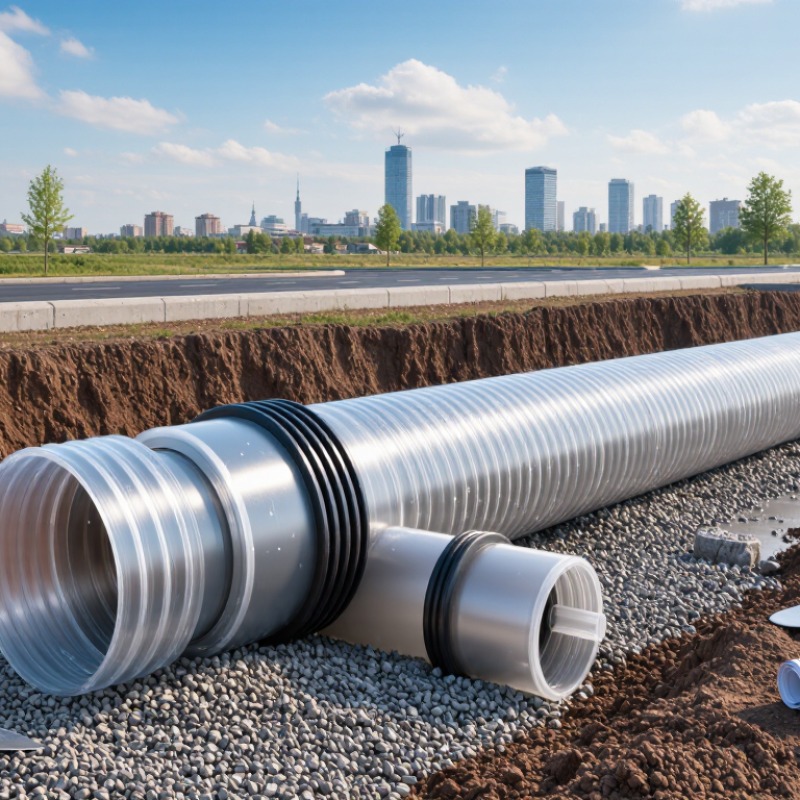
A plastic blind drain is a buried system that collects and carries groundwater away from vulnerable areas. Common designs place perforated plastic pipe in washed stone, with geotextile filtering soil around the aggregate. Water passes through the soil and stone, enters the pipe, then flows toward an outlet. The filter helps limit soil migration and clogging. Terminology varies between markets: some suppliers mean only the pipe, while others mean the complete trench system. That distinction matters.

Blind drains are commonly installed behind retaining walls, beneath road shoulders and sports fields, around foundations, and in waterlogged landscape beds. They help manage seepage, but cannot correct poor surface grading or a blocked discharge point.

The United Nations’ World Urbanization Prospects: The 2018 Revision projected that 68% of the world’s population would live in urban areas by 2050.

This is not a product-demand forecast, but it highlights growing pressure on urban drainage. For design context, the Federal Highway Administration’s Geosynthetic Design and Construction Guidelines treats drainage and filtration as linked functions. Check soil conditions, expected water flow, pipe stiffness, and outlet access. Even sound plastic can fail if the filter clogs or the pipe lacks adequate fall.

How Do You Choose the Right Drain Type and Material?

Start with the drainage job, not the product label. Perforated pipe lets groundwater enter through slots or holes; solid pipe carries collected water away. Some suppliers use “blind drain” differently, so confirm the opening pattern, diameter, and intended installation. Check the profile, too. A narrow trench with fine gravel places different demands on a pipe than a vehicle-accessible yard.

Material affects flexibility, impact resistance, and installation. HDPE bends around gentle curves and handles movement in the ground, while rigid PVC may suit straighter runs with stable bedding. Neither is automatically better. Ask for wall or corrugation details, joint design, and stiffness data for the actual product. A crushed edge at delivery is a warning, not a cosmetic flaw.

TEPPFA’s 2014 life-cycle assessment for buried plastic pipe systems uses a 100-year reference service life. That figure is a modeling assumption, not a guarantee for every drain or site. Soil chemistry, load, installation, and blockage risk all matter. Compare the report’s scope with your project. Then match the pipe class to burial depth and expected load, and request test documentation. A catalog table can still mislead. Check the details.

7 Plastic Blind Drain Buying Tips for Global Buyers — How Do You Choose the Right Drain Type and Material?

Buying tip Options to compare How to choose What to verify
1. Match the drain type to the application Perforated pipe; geocomposite strip drain; perforated pipe surrounded by a filter aggregate Use perforated pipe or a composite drain to collect subsurface water. A geocomposite may suit confined spaces; a pipe-and-aggregate system is common where a trench can be excavated. Site layout, groundwater conditions, available installation space, and the design engineer’s drainage specification.
2. Select material for the site conditions HDPE, PVC, or polypropylene (PP), depending on product design and local availability Compare chemical exposure, temperature range, stiffness, flexibility, and installation method. No single polymer is best for every soil and project condition. Published material data, compatibility with expected soil or water chemistry, and applicable local product requirements.
3. Size the pipe for the required flow Available internal diameters and perforated-pipe configurations Base diameter selection on expected inflow, pipe length, slope, outlet level, and system layout. A larger nominal diameter alone does not guarantee adequate drainage. Hydraulic calculations, actual internal diameter, and the manufacturer’s flow or capacity data for the proposed configuration.
4. Check perforation and filter compatibility Slot or hole pattern; geotextile wrap; graded filter aggregate Choose openings and filter layers to admit water while limiting soil-particle entry. Requirements vary with soil gradation, so avoid selecting a slot size without soil information. Perforation dimensions and layout, geotextile filtration properties, and compatibility with the project’s soil or aggregate gradation.
5. Confirm strength for burial conditions Corrugated flexible pipe; smooth-wall pipe; different stiffness or load classes Consider burial depth, soil support, groundwater, construction traffic, and expected surface loads. Flexible pipe performance depends on both pipe stiffness and proper embedment. Relevant stiffness or load-test results, installation guidance, and the design requirements for cover depth and surrounding material.
6. Review connections and installation details Socket or coupler joints; compatible fittings; cleanouts and outlet connections Check that pipe sections, bends, tees, and outlets fit together and can be installed without obstructing flow. Plan access points where inspection or flushing may be needed. Connection dimensions, fitting compatibility, recommended trench bedding, minimum slope, and maintenance access requirements.
7. Validate documentation and delivered specifications Technical data sheets, test reports, inspection records, and shipment documentation Compare the quoted product with the project specification before purchase. Confirm that the product is intended for drainage use and that its stated properties suit the installation. Applicable standards for the destination market, material and dimensional tolerances, test methods, and required import or quality documents.

Note: Final drain type, dimensions, filter design, and installation details should be selected for the project’s soil, groundwater, loading, and local code requirements.

How Can You Check Drainage Capacity and Soil Compatibility?

Ask for drainage-capacity data at a stated pipe diameter, slope, and water head. A single maximum-flow figure is hard to compare. Capacity changes with installation gradient, outlet conditions, and the drain’s internal shape. Request the test method and results, not just a catalogue number. If possible, compare samples in a simple test rig: keep the slope and water supply consistent, then record the time needed to discharge a measured volume. Useful, but not a substitute for site design. Small details matter.

Check the soil before choosing the pipe or filter. A grain-size analysis can show whether the soil contains fine particles that may enter openings or clog a surrounding filter. Compare those results with the product’s slot size and any recommended geotextile. Also ask for material information suited to the site’s temperature and soil chemistry. Soil varies over short distances, so one sample may not tell the whole story. It is easy to trust a tidy specification sheet too much; confirm that its test conditions resemble the actual slope, soil, and expected water flow.

Which Quality Standards and Supplier Credentials Should You Verify?

Before buying a plastic blind drain, verify the product standard and the exact test conditions. EN 13252 covers geotextiles and related products used in drainage. ASTM D4716 evaluates in-plane flow under specified pressure and hydraulic gradient. Request reports showing flow rate, sample thickness, test direction, and applied pressure. A “compliant” label alone proves little. Paperwork matters.

Check that the supplier’s ISO 9001 certificate covers the manufacturing site and relevant production scope. Confirm its validity with the issuing certification body. For test results, look for an ISO/IEC 17025-accredited laboratory and reports matching the product you will purchase. Ask for batch traceability, inspection records, change-control procedures, and a production sample. A polished certificate cannot replace a close look at the actual drain core and filter fabric.

Tip: If recycled polymer is specified, request documented content and batch records. The OECD’s Global Plastics Outlook reports that 353 million tonnes of plastic waste were generated worldwide in 2019, and only 9% was ultimately recycled. Supplier claims deserve verification; even a small material change can affect consistency between shipments.

7 Plastic Blind Drain Buying Tips for Global Buyers

Which quality standards and supplier credentials should you verify?

The 1–5 scores are a suggested buyer-priority rubric, not product ratings or regulatory requirements. Request traceable batch records and relevant performance reports; check that an ISO/IEC 17025 laboratory’s accreditation covers the tests performed, and verify any ISO 9001 certificate’s scope and validity. ASTM D4716 and ASTM D4491 are test methods for geosynthetic flow properties; confirm their suitability for the specific drain construction and application before specifying them.

How Should You Compare Pricing, Shipping, and Installation Support?

Compare like for like. Ask whether each quote specifies drain width, core thickness, filter fabric, and flow capacity. Check compressive strength against expected soil pressure, and request test data with stated conditions. A low unit price may hide thinner cores or shorter rolls. Small details matter.

Calculate landed cost, not just factory price. Confirm roll length, pallet dimensions, gross weight, and loading method before booking freight. Plastic drainage rolls may occupy more container space than their weight suggests. Request lead time, packing details, and written procedures for reporting damage. Include customs handling and inland delivery estimates, since small fees add up. Still, even a careful spreadsheet can miss local site conditions.

Installation support deserves a separate comparison. Ask for guidance on overlaps, cutting, connections to outlet pipes, and protection during backfilling. A useful supplier should explain these points clearly, rather than send only a generic sheet. Ask whether technical staff can review project drawings or answer questions during installation. Confirm recommendations suit the soil, groundwater level, and expected load. If support is promised verbally, request the scope in writing. This step is easy to overlook when price pressure is high.