
Menu

Top Intelligent WC Toilet Manufacturers for Global Buyers

Intelligent Wc Toilet products are moving from premium showpieces into practical bathroom projects. Grand View Research estimated the global smart toilet market at USD 9.4 billion in 2023, with projected growth through 2030. The figure signals momentum, not a guaranteed outcome. Market reports use different product definitions, so buyers should compare their assumptions carefully.

For global buyers, choosing a manufacturer involves more than comparing seat features. A showroom model may offer heated seating, bidet washing, automatic flushing, and air drying. The real test comes later: Are replacement parts available? Can the supplier document water and electrical requirements? Does the product suit local plumbing, user preferences, and installation conditions? Small details matter. A poorly matched outlet or unclear service process can complicate an otherwise attractive order.

This guide introduces manufacturers serving international markets and the capabilities buyers can examine. It considers product range, customization, quality controls, export experience, and after-sales support. These are useful starting points, not proof of performance. Request current technical documents, sample terms, and references for comparable projects. Then verify the claims. Even a polished catalogue leaves questions unanswered. A manufacturer that communicates limitations clearly may be a more dependable partner than one promising everything.
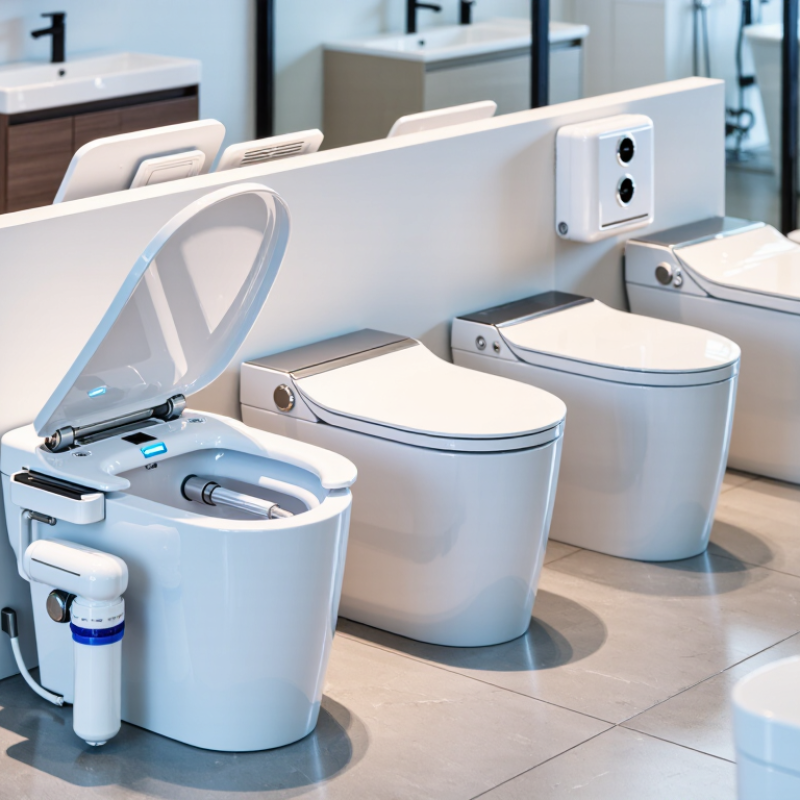
Top Intelligent WC Toilet Manufacturers for Global Buyers

Understanding Intelligent WC Toilets and Their Global Market

Intelligent WC toilets combine familiar bathroom functions with powered features such as warm-water cleansing, heated seats, air drying, and automatic flushing. Controls may sit on a side panel or handheld remote, while sensors can open the lid or activate flushing. Useful details are often small: a clearly marked wash button, an adjustable nozzle, and a manual flush option during a power outage.

The global market is shaped by different bathroom layouts, utility conditions, and user expectations. A model designed for one region may not suit another without checking voltage, water pressure, inlet position, and available space. Some homes use concealed tanks; others have exposed plumbing. These differences affect installation and servicing, not just appearance. Buyers should review technical drawings and ask what routine maintenance requires.

For global buyers, manufacturer evaluation should include test documentation, spare-part availability, warranty terms, and responsive technical support. Ask whether replacement nozzles, filters, or remote controls can be obtained several years later. Comfort features matter, but so do clear instructions and dependable components. Comparisons are not always tidy: specifications may use different names for similar functions, and a longer feature list does not prove better performance. A practical assessment includes installation costs, cleaning access, and the needs of the people who will use the toilet every day.

Intelligent WC Toilets: A Global Urbanization Context

The global urban population share is projected to rise, providing useful context for buyers evaluating intelligent WC toilets for urban homes and buildings. Urbanization is a market context indicator, not a direct measure of toilet sales.

Source: United Nations, Department of Economic and Social Affairs, World Urbanization Prospects: The 2018 Revision. 2050 figure is a projection.

Key Technologies That Distinguish Leading Manufacturers

Leading intelligent WC toilet manufacturers distinguish themselves through engineering, not a long feature list. A rimless bowl paired with a tuned vortex flush can help rinse the rear curve and reduce hard-to-reach residue. Yet showroom demonstrations rarely reflect low water pressure or older plumbing. Real-world testing matters.

Sensor systems should respond consistently without opening the lid whenever someone passes. Adjustable detection zones, manual flush controls, and clear fault indicators make daily use less frustrating. Small details count. A heated seat needs stable temperature control, while a bidet nozzle should retract fully and be easy to clean. Core functions should remain usable if a sensor or app fails.

Material quality is equally important. Dense ceramic, an even glaze, and well-sealed joints help limit staining and simplify cleaning. Manufacturers should test repeated flushes, nozzle cycles, seat hinges, and power interruptions, then share understandable performance data. Ask about replacement filters and service access. Fancy interfaces can age badly. Some controls still feel overcomplicated, and testing across different users could be better. Buyers should compare measured performance, not just feature claims.

Profiles of Notable Intelligent WC Toilet Manufacturers

Profiles of intelligent WC toilet manufacturers should look beyond glossy control panels. Established sanitary-ware producers often emphasize ceramic quality, stable flushing, and broad service networks. Specialist electronics-led makers may offer app controls, sensor flushing, heated seats, and adjustable washing. Details matter. Buyers should check whether replacement nozzles, filters, and remote controls remain available after installation.

Fortune Business Insights estimated the global smart toilet market at USD 9.93 billion in 2023, with a forecast of USD 16.04 billion by 2032. This growth suggests expanding demand, but market estimates depend on how products are classified. They do not prove that every manufacturer offers equal reliability. A useful supplier profile therefore records test standards, warranty terms, local installation support, and spare-part lead times.

For a practical comparison, ask manufacturers for water-use figures, noise measurements, and maintenance instructions. Test the seat height and control layout in person where possible. A polished showroom model can hide awkward servicing access. That matters. Reviewers should also note which functions require continuous power and whether the toilet works during outages. These checks make a profile more useful than a feature list, though supplier claims still need independent verification.

Top Intelligent WC Toilet Manufacturers for Global Buyers - Profiles of Notable Intelligent WC Toilet Manufacturers

Anonymous manufacturer archetypes for procurement comparison. These profiles describe common business models and capabilities, not named companies, verified rankings, or claims about any specific supplier.

Manufacturer Profile Typical Strengths Capabilities to Assess Key Buyer Checks Best-Fit Purchasing Priorities
Integrated sanitaryware manufacturer May combine ceramic-body production with final product assembly, enabling closer coordination of the pan, cistern, seat, and electronic functions. Ceramic quality control, glazing consistency, assembly traceability, model range, and capacity to manage complete-product testing. Request product-specific electrical and water-safety documentation, production quality records, and evidence that the tested configuration matches the quoted model. Buyers seeking a coordinated toilet-and-bidet system and a supplier with broad sanitaryware production experience.
Electronics-led product manufacturer May focus on controls and user features such as heated seating, wash settings, dryers, sensors, and remote controls. Electrical design controls, software or control-panel support, component traceability, fault handling, and availability of replacement electronic parts. Check applicable electrical-safety reports, local voltage and frequency compatibility, plug type, protection against water ingress, and service-part availability. Buyers prioritizing feature options, electronics support, and documented compatibility with destination-market requirements.
Export-focused OEM/ODM supplier May offer private-label production, configurable specifications, and packaging or documentation adapted for different markets. Change-control procedures, sample approval, label and manual customization, production capacity, and export documentation processes. Confirm ownership and approval of design changes, inspection criteria, warranty responsibilities, shipping terms, and the exact configuration covered by test reports. Importers and distributors seeking private-label products or market-specific configurations.
Premium design-oriented manufacturer May emphasize integrated appearance, concealed connections, user-interface design, and coordinated bathroom collections. Finish consistency, installation tolerances, design-change control, spare-part continuity, and installer documentation. Review installation drawings, required rough-in dimensions, electrical access requirements, water connections, and maintenance instructions before specifying the product. Projects where design consistency, installation planning, and a coordinated bathroom specification are important.
Regional-market specialist May tailor product configurations and documentation to the plumbing practices, electrical supply, and distribution channels of its primary markets. Local technical support, language coverage, regional certification status, service network, and availability of compatible parts. Verify that approvals apply in the destination country and to the precise model. Confirm local warranty terms and who provides installation and after-sales support. Buyers who value market-specific documentation, local servicing, and established regional distribution.

Standards and verification: IEC 60335-1 covers general safety requirements for household and similar electrical appliances; IEC 60335-2-84 addresses particular requirements for toilets. IEC 60529 specifies IP-code classification for enclosure protection. Ask suppliers for current, model-specific evidence and check local regulatory requirements. In the United States, the EPA WaterSense specification for tank-type toilets sets a maximum effective flush volume of 1.28 gallons (4.8 litres) per flush for qualifying products; confirm the exact product’s eligibility rather than assuming all intelligent toilets qualify.

How Global Buyers Can Compare Manufacturers and Product Lines

Global buyers comparing intelligent WC toilet manufacturers should examine engineering, not just showroom images. A polished seat tells little about long-term service. Request a model-by-model specification sheet covering flush volume, bowl dimensions, water pressure range, heating settings, and electrical input. Confirm that each configuration suits the destination market and its available water and power connections. Options vary. One product line may offer heated seats and warm-air drying, while another favors simpler controls and easier maintenance. Compare nozzle cleaning, removable parts, and replacement-part availability. These details matter in hotels, apartments, and private homes.

Ask how each model is tested, and request clear records for water-leak checks, flushing performance, and electrical safety. Review warranty terms, spare-part lead times, installation guides, and remote technical support. A sample unit can reveal practical issues that a brochure misses, such as confusing controls or a seat that feels awkward. No checklist is perfect. Specifications may also differ between similar-looking models, so record exact model numbers when comparing quotations. I would leave room for doubt, too: a lower price is not automatically better value if service access or parts supply remains unclear. Compare the complete product line against your project’s users, maintenance capacity, and expected installation conditions.

International Standards, Sourcing, and After-Sales Support

Global buyers should treat standards as a verification task, not a logo checklist. IEC 60335-2-84 covers safety requirements for toilets, urinals, and bidets; ask whether the exact intelligent toilet model was tested against applicable requirements. ISO 9001 describes a quality-management system, not product safety certification. Request current test reports, model numbers, and the name of the testing laboratory. Check that electrical ratings, plugs, and water connections suit the destination market.

Supply planning matters just as much. The WHO/UNICEF Joint Monitoring Programme reported that 3.5 billion people lacked safely managed sanitation in 2022. That figure does not measure demand for intelligent toilets, but it underlines how strongly sanitation depends on reliable infrastructure. Before ordering, confirm local water pressure, drainage layout, voltage, packaging protection, and spare-parts availability. A carton may survive a warehouse yet fail after a rough port transfer. Small detail. Ask for a written parts list and realistic production lead times, not only a sample-unit promise.

After-sales support should be tested before a purchase order is signed. Request installation guides, fault codes, warranty exclusions, and response-time commitments in writing. Confirm who handles troubleshooting across time zones and how replacement valves, control boards, or seats are shipped. Keep a record of batch numbers and inspection results. One point is easy to miss: a polished demonstration unit says little about service quality two years later. Remote diagnosis can help, but it cannot replace local technicians or stocked parts. I would also check the claims against actual service records; suppliers may not have perfect data, and that gap deserves discussion.