What Is Veneered Plywood and What Types Are Available?
Veneered Plywood pairs thin wood layers with a stable panel core, but the term can describe products with different faces, cores, and intended uses. A pale birch surface, a dark walnut face, or a rougher utility-grade sheet may all be sold under similar labels. The details matter. Veneer species and cut affect grain appearance; core construction and bonding influence how a panel behaves. Buyers should check the product specification, not rely on a showroom sample alone.
The market context is broad. The Food and Agriculture Organization’s Global Forest Products Facts and Figures 2023 and FAOSTAT forestry tables track wood-based panel production and trade. These sources help explain the scale and movement of panel products, but they cannot verify the grade of an individual sheet. For technical context, the USDA Forest Products Laboratory’s Wood Handbook covers wood properties, moisture, and performance factors relevant to panel selection. Real performance still depends on the product and its application.
This guide explains the main types of Veneered Plywood, including differences in veneer species, cutting methods, core materials, and grades. It also outlines where appearance, strength, and moisture resistance may matter, without treating one panel as suitable for every project. Labels can be confusing. Even familiar terms may vary between suppliers, so confirm thickness, face grade, core, and stated use before specifying or purchasing. A sample helps, but it is not the whole story.
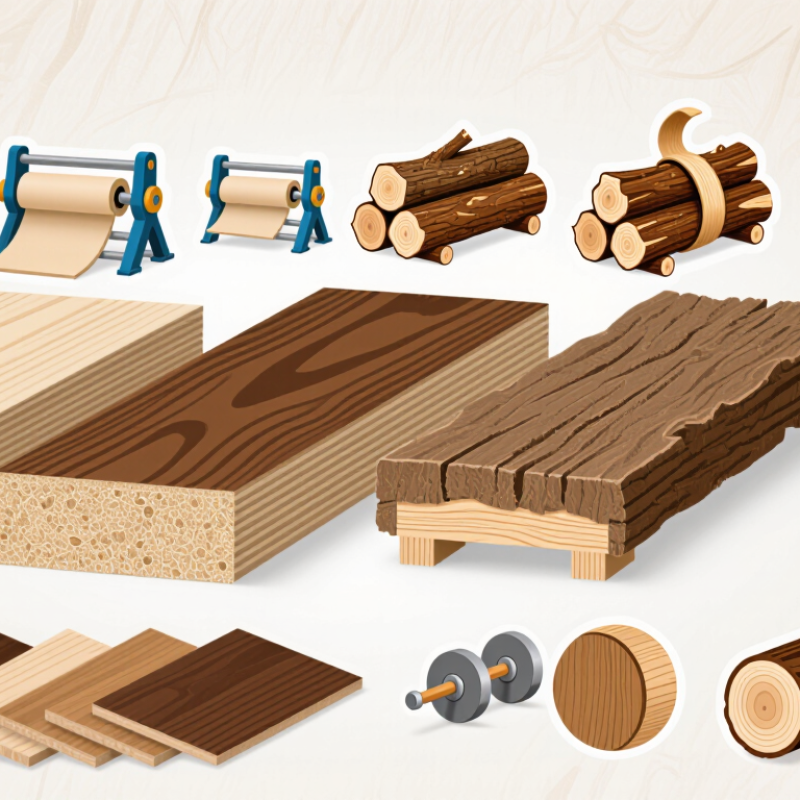
What Veneered Plywood Is and How It Is Made
Veneered plywood combines a thin sheet of real wood with a stable plywood core. The outer veneer provides the visible grain, while the core supplies much of the panel’s strength. It is not solid wood, though its surface can look remarkably similar. A close look at an exposed edge often reveals the alternating layers beneath.
Making the panel begins with logs, which are softened and cut into thin sheets by slicing or rotary peeling. The veneer is dried, sorted, and checked for defects such as splits or uneven color. Meanwhile, core layers are arranged with their grain running in alternating directions. This cross-grain construction helps limit movement as humidity changes. It is useful, but not magic.
Adhesive is spread between the layers, then heat and pressure bond them into a panel. The finished sheet may be trimmed, sanded, and graded for appearance and intended use. Veneer thickness and core quality vary, so panels with similar faces can perform differently. Check the edges and product specifications before choosing one. Even a smooth face can hide small core voids. That detail matters.
For furniture, a carefully matched face may be important; for hidden cabinet parts, consistency and stability may matter more.
The Main Layers and Materials Used in Veneered Plywood
What Is Veneered Plywood and What Types Are Available?
The Main Layers and Materials Used in Veneered Plywood
Veneered plywood has a thin decorative wood layer bonded to a layered plywood panel. Its face veneer provides the visible grain and color. Beneath it, cross-laid wood plies form the core, helping the panel resist bending and changes in shape. A back veneer balances the panel and may be a less decorative grade. Adhesive holds the layers together, but its type affects suitability for different moisture conditions.
Face veneers may come from hardwoods such as oak, maple, or walnut, each with distinctive grain and tone. Core materials vary too. Some panels use consistent hardwood plies, while others use softer wood or mixed species. These differences affect weight, screw-holding, edge appearance, and stability. A polished surface can be misleading; inspect the edges and panel specifications before choosing. Veneer thickness also matters, especially if sanding or refinishing is planned.
Tips: Check for flatness, even color, and loose edges. Ask what the core and adhesive are made from, and confirm the panel’s intended setting. Keep samples near the project’s actual lighting. Grain can look different there.
Types of Veneered Plywood by Wood Species and Finish
Wood species give veneered plywood much of its visible character. Oak has open grain that remains noticeable under clear finishes, while maple tends to look smoother and more restrained. Walnut brings darker brown tones; cherry often deepens in color as it ages. Grain matters. Natural variation means two sheets of the same species may not look identical.
Finish changes both appearance and upkeep. Clear finishes preserve much of the veneer’s natural color, while stains can shift the tone but may emphasize uneven grain. Unfinished panels allow custom treatment, though they need suitable protection for their intended setting. Prefinished faces offer a ready-to-use surface, but sheen and color can vary between suppliers. Matte finishes soften reflections; gloss makes grain stand out more.
Choose by viewing a sample in the room’s actual light, since showroom lighting can distort color. Check the face veneer and ask how the panel is finished before specifying it. A species name is not a perfect color promise. The result may be less uniform than expected, especially across large installations, so matching sheets before fitting is worth the extra care.
Types of Veneered Plywood by Core Construction
Veneered plywood is made by bonding a thin decorative wood layer to a structural core. The core affects weight, stiffness, screw holding, and surface quality. It matters more than many buyers expect.
Veneer-core panels use several thin wood layers, with neighboring layers laid in different directions. This cross-banding helps limit warping and gives the panel useful strength for cabinets and wall panels. Small core gaps can sometimes show beneath a thin face veneer. Check the panel edge and surface under angled light. It is not always flawless.
Lumber-core panels place narrow solid-wood strips between outer veneer layers. They can hold screws well and suit shelves or doors, though changes in humidity may cause movement. MDF-core panels have a smooth, even surface that accepts paint or thin veneer neatly. They are heavier, and their edges may hold screws less reliably. Particleboard-core panels are often flat and economical, but moisture can swell their edges. Combination cores pair materials to balance surface smoothness with strength. The right choice depends on the panel’s use, finish, and expected exposure to humidity. Check the product specification; core quality varies.
Types of Veneered Plywood by Core Construction
How to read: A value of 1 indicates a characteristic component; 0 means it is not the defining core material. Veneered plywood generally has veneer face layers, while the core may be made from veneer plies, solid wood strips, MDF, or particleboard. Actual constructions can vary by product.
Common Uses and Factors for Choosing a Veneered Plywood Type
Veneered plywood suits jobs where a stable panel needs a natural wood surface. Hardwood-faced panels are common in cabinets, furniture, doors, and wall linings; softwood-faced panels often serve structural sheathing and utility interiors. Flexible plywood can curve around counters or display forms, while exterior-bonded panels are made for wetter exposure. “Marine” describes construction quality, not a guarantee that a panel is waterproof. Details matter.
Choose by use, not appearance alone. Check face grade, core species, thickness, sanding quality, and the panel’s stated exposure rating. For a kitchen cabinet, inspect the face for matching grain and the core for voids near screw locations. For exterior work, confirm the adhesive bond and finishing requirements with the supplier. Moisture shifts matter. The USDA Forest Products Laboratory’s Wood Handbook (FPL-GTR-282, 2021) lists equilibrium moisture content at about 7.7% for wood at 70°F and 40% relative humidity. That figure helps explain why indoor humidity and installation conditions can affect panel movement. It is not a universal target; local conditions vary. A small sample can reveal color, grain, and edge quality before a full order, though samples rarely show every production variation.