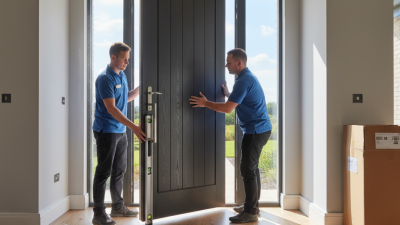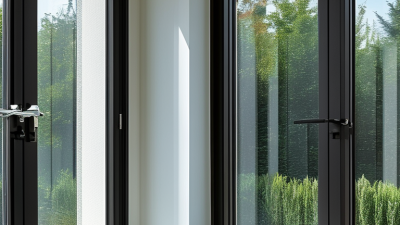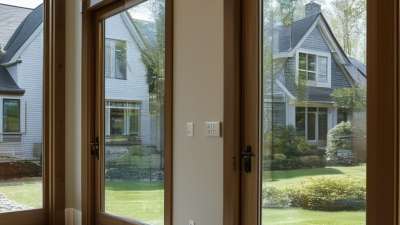
Choosing among the top door contractors in China is not simply a matter of comparing prices. A contractor may supply a polished showroom sample yet struggle with installation tolerances, delivery coordination, or after-sales support. The real test appears at the jobsite: a frame meeting an uneven wall, hardware aligning cleanly, and a door closing without rubbing. Small details matter.
Architect Ludwig Mies van der Rohe is often associated with the line, “God is in the details.” It is a useful lens for evaluating door contractors, even though it is not a door-industry quotation. A strong contractor should explain materials, finishes, fire and acoustic performance where relevant, installation methods, and warranty terms in plain language. They should also show completed projects that match the scale and use of your own. Ask how they handle measurement changes and who answers when a hinge needs adjustment months later.
This guide examines China-based contractors through practical signals: product range, manufacturing capability, project experience, quality-control processes, and communication. No single ranking can fit every buyer. A hotel developer, a homeowner, and a commercial builder need different things. Some companies may present impressive certificates, but documents alone do not prove consistent workmanship. Ask for references, inspect samples closely, and clarify what is included in the quote. It takes time. That can be frustrating. The aim is not to find a flawless supplier, but to identify a reliable partner whose promises can be checked against real work.
Who Are the Top Door Contractors in China?
Door contracting in China covers more than supplying door leaves. Projects may include site measurement, frame installation, hardware coordination, finishing, and handover checks. A contractor’s scope depends on the project: a hotel may need consistent fire-rated assemblies, while an apartment renovation may prioritize accurate fitting and clean finishes. The details matter. A small measurement error can leave uneven gaps or a door that rubs against the floor.
The market includes manufacturers with installation teams, independent contractors, and project integrators coordinating several trades. Their roles can overlap, so compare written scopes rather than job titles alone. Strong contractors typically document dimensions, materials, tolerances, lead times, and inspection steps. Ask how they handle warped frames, delayed hardware, and changes after site measurement. Regional labor availability and delivery distance can also affect schedules. “Top” is not one fixed ranking; it depends on project size, location, and required service. I would still verify claims against recent project records, since a polished portfolio does not prove consistent site work.
Tips: Request a sample checklist and a clearly itemized quotation. Confirm who measures, installs, and resolves defects. Keep one opening’s measurements for review before bulk production. It takes extra time, but it can prevent costly rework.

China’s door contractors generally fall into several working models, and the boundaries can overlap. Some are manufacturers with in-house installation crews. They coordinate door dimensions, hardware, and fitting through one team, which can help on projects requiring many matching units. Yet installation capacity may vary by location. Ask who measures each opening and who handles adjustments on site.
Independent installation firms focus on measuring, fitting, replacement, and repair. Their crews may install doors supplied by a client or distributor. Check whether the contractor has experience with similar materials, such as solid wood or aluminum. Ask how workers protect finished floors and deal with uneven walls. Small details matter. A polished quotation is not proof of careful workmanship.
Commercial project contractors manage larger packages for offices, hotels, and residential developments. They coordinate schedules with builders and other trades, while specialist firms may take on renovation or custom-design work. The categories are not perfectly tidy; one firm may do both. I would not judge a contractor by its brochure alone. Compare written responsibilities, project references, and after-sales response, then ask who returns if a door starts rubbing after installation.
A strong contractor proves performance, not just production capacity. Check documented project experience, material traceability, installation procedures, warranty terms, and after-sales response times. Ask to inspect completed projects and review test records for fire resistance, acoustic insulation, air leakage, and thermal performance where relevant. Details matter.
The National Bureau of Statistics reported that China’s construction industry produced 31.59 trillion yuan in output value in 2023. That scale makes supplier comparison important, but market size alone cannot establish quality.
Look for test reports that identify the tested product, method, and laboratory, rather than broad claims in a sales brochure. The UNEP 2023 Global Status Report for Buildings and Construction estimated that the sector accounted for 37% of global energy- and process-related carbon emissions in 2022. This makes verified door-envelope performance a meaningful selection criterion.
Also compare delivery records, site coordination, and how contractors handle defects after installation. A polished sample can hide uneven workmanship.
No scorecard is perfect: project conditions vary, and a strong factory audit cannot guarantee careful installation at every site. Ask for references from comparable projects, then confirm who is responsible when the schedule or specifications change.
China’s leading door contractors are best compared by product and project specialization, not by a single national ranking. For apartment towers, assess firms on consistent door sizing, fire-door documentation, and the ability to deliver across many floors. The National Bureau of Statistics reported 998.31 million square metres of completed real-estate development in 2023, up 17.0 percent year on year. That figure indicates project scale, not door orders, but it helps explain why dependable production and installation capacity matter.
Commercial buildings need a different skill set. Contractors serving offices, hotels, and hospitals should demonstrate acoustic control, durable hardware, and coordination with access systems. Ask for project references that match the building type. A polished showroom is not proof of reliable site work. Inspect completed openings, seals, hinges, and frame alignment; small defects become costly when repeated across a large project.
Energy performance also shapes product selection. The Ministry of Housing and Urban-Rural Development reported that green buildings accounted for 91.2 percent of new urban building area in 2022. This makes thermal performance and careful installation increasingly relevant, especially for exterior doors. Yet specifications alone can mislead. A contractor may meet listed values while struggling with uneven walls or rushed handovers. The better choice is the team that documents testing, explains limitations, and adapts details to actual site conditions.
A strong door contractor is not automatically the right one for every project. Compare firms against the building’s actual needs: a hotel may require consistent finishes across hundreds of openings, while a renovation may depend on accurate measurements and careful fitting around uneven walls. Ask each contractor to explain how they handle drawings, samples, production checks, delivery, and installation. Specific answers are more useful than broad promises.
Look at relevant project records, not just attractive photos. Request references for similar door types and building conditions, then ask what changed during installation and how problems were resolved. Compare quotations line by line, including hardware, finish, packaging, site measurements, and after-sales support. A low price can hide missing items. Details matter. Also confirm who coordinates site work and who approves final measurements; unclear responsibility can cause delays. I would not treat a polished showroom sample as proof that every delivered door will match it.
Tips: Share one clear specification with every contractor, including dimensions, material, finish, fire or acoustic needs, and delivery location. Ask for a sample and written inspection criteria before production. Check lead times against your construction schedule, and keep a record of approved changes. A spreadsheet helps, though it cannot predict every site issue.